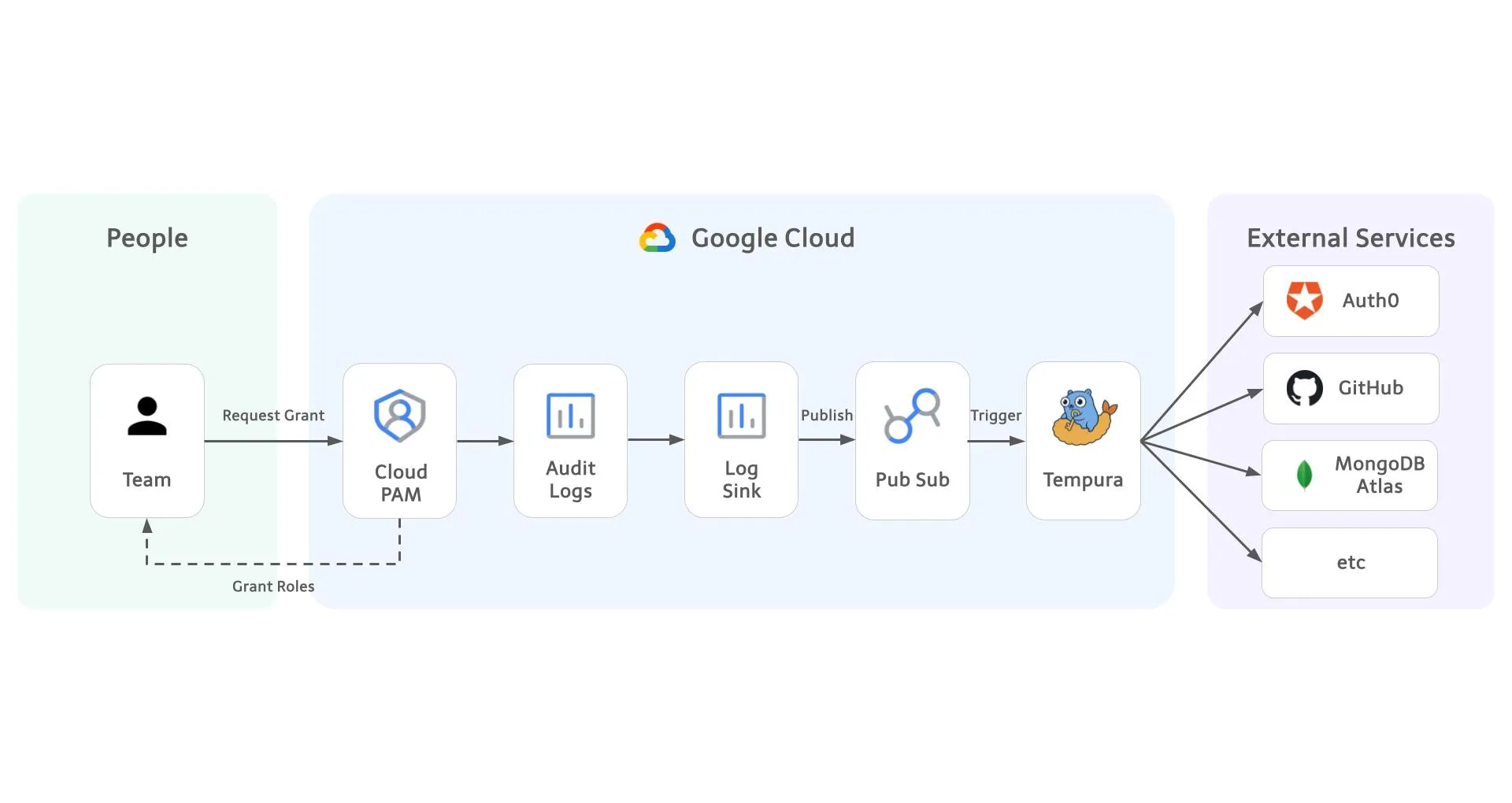
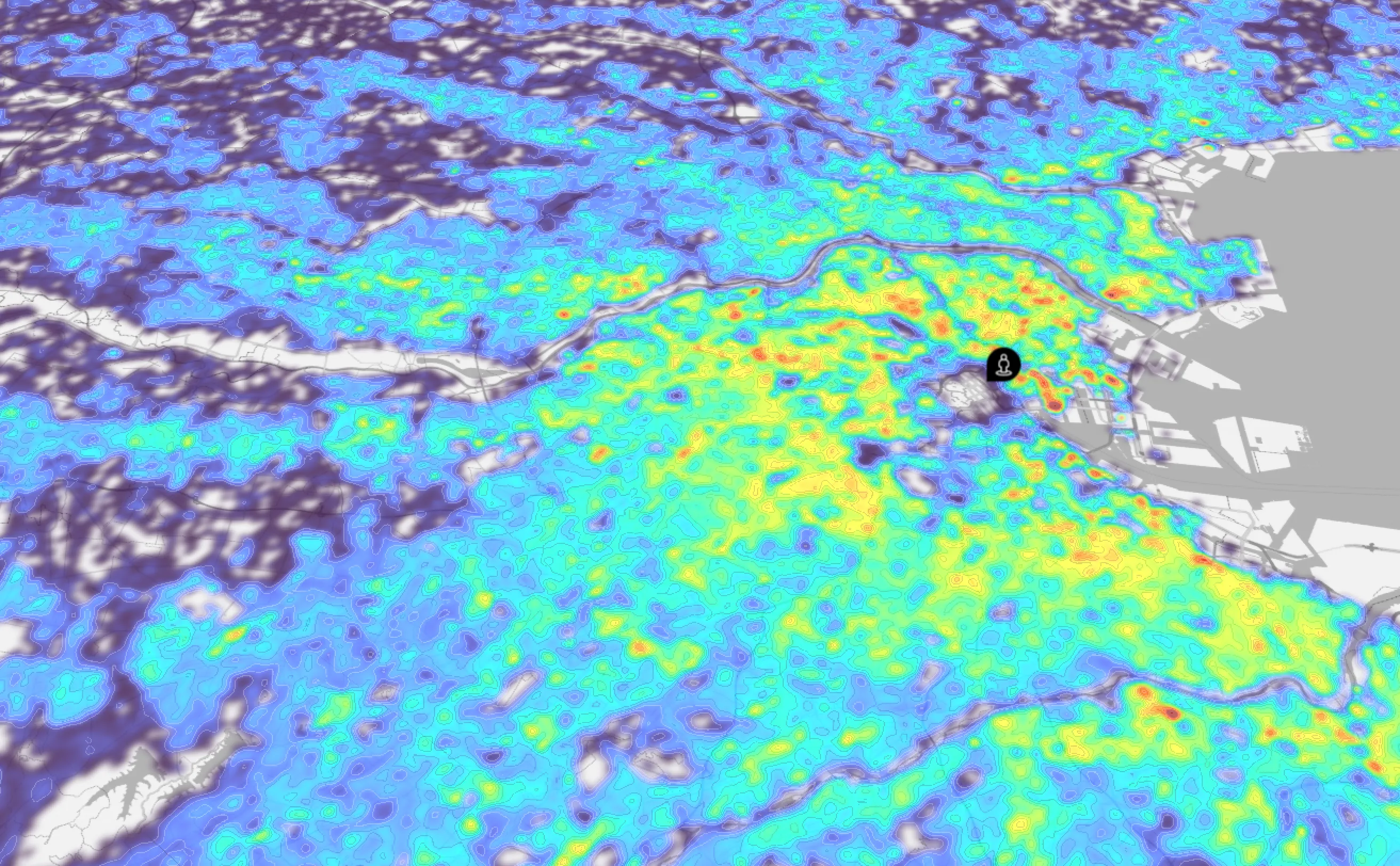
Re:Earth Engineering English 2026-09-16 Tempura - A Cross-Provider Privileged Access Manager Built on Google Cloud PAM We built Tempura to extend Google Cloud PAM’s approval workflow to SaaS access. Using Terraform providers, it automatically grants access after approval and revokes it at expiry—bringing one request flow and a unified audit trail to the tools we depend on. 2026-09-07 The Map Became a Painting Again — Drawing Tiles With a Brush, at the Moment They Are Requested Re:Earth Papers is a service that generates painted basemaps on the spot, at the moment they are requested. This article covers the node graph that expresses processing as boxes joined by wires, the brush engine hokusai that produces real strokes, how a tile is drawn one at a time on Cloudflare Workers, and the cache design that makes it work in production. 2026-06-17 Terrain Tiles Without Pre-generation - Building Terrain Meshes at the CDN Edge Re:Earth Terrain builds terrain meshes at the CDN edge, one request at a time. This article explains how we deliver global terrain tiles with no origin server — just one Worker and R2 — and the cache design that makes it hold up in production. 2026-05-14 Introduction to RBAC and How Re:Earth is realizing Authorization An overview of Role-Based Access Control (RBAC) and how Re:Earth implements authorization with Cerbos to manage workspaces, projects, and public URL sharing across its geospatial platform. 2026-01-23 Challenge to High-Speed, Memory-Efficient XML Processing A fast, memory-efficient XML streaming processing library called "gosax" written in Go has been developed. It has been confirmed to use memory efficiently and deliver high performance in specific use cases. It is also being utilized in PLATEAU's CityGML processing. 2025-12-19 Searching PLATEAU Data with AI! We've Released a Remote MCP Server A remote MCP server for the PLATEAU has been released, making it possible to ask AI questions about PLATEAU data. The article also explains key points such as how to implement an MCP server in Go, tool definitions, and error handling. 2025-11-21 3D Model Compression 2: Introduction to rANS rANS is a widely-used modern compression algorithm that achieves the best compression ratio while maintaining the speed of Huffman coding. In this article, we will explore the core principles behind the algorithm. 2025-11-14 No Pre-conversion Required! Load GIS Data into DuckDB and Display Vector Tiles A method to generate vector tiles on-demand from GIS data using DuckDB and display them with MapLibre GL JS. This approach eliminates the need for pre-conversion, achieving flexible and high-speed map rendering. 2025-10-28 Rendering Models with High Precision in Global Scenes When rendering Earth-scale scenes like in map engines, GPU numerical precision can become insufficient. I'll introduce RTC and RTE, which solve this problem. 2025-07-15 3D Model Compression 1: Edgebreaker Compression Algorithm The Edgebreaker algorithm is a powerful compression algorithm for the connectivity of 3D models, used by the major mesh compression libraries such as Google’s Draco library. We will go over its characteristics and definitions. 2025-04-11 Building a MongoDB cluster on Google Cloud for non-disruptive rolling updates A self-hosted MongoDB replica set on Google Cloud was built using Stateful Managed Instance Groups (MIG) for high reliability and minimal operational costs, addressing challenges with managed services and ensuring continuous availability during updates through careful configuration and the use of Arbiters. 2025-01-31 Rendering Polygons along the Terrain using a Stencil Test This introduces an implementation for rendering polygons and shading along the terrain using a stencil test in the new 3D map engine, enabling this functionality without requiring complex shaders. 2024-11-28 Terraform with Monorepo and GitHub Actions: Optimizing CI/CD with Side Effects We manage Google Cloud resources using Terraform. By adopting Terraform Modules and a Monorepo structure, we efficiently apply consistent changes across environments while improving maintainability. This article highlights our efforts to enhance CI/CD workflows, including tracking Module changes and optimizing processes using GitHub Actions. 2024-11-20 What is RTIN, which builds hierarchical LOD in real time? I implemented RTIN algorithm, which builds hierarchical LOD in real time. This algorithm significantly reduces the number of vertices in terrain rendering, allowing for efficient rendering while maintaining visual quality. 2024-10-11 Not Just Apollo Client! Why TanStack Query (React Query) is Recommended for GraphQL Make GraphQL development easier with TanStack Query! Using TanStack Query and graphql-request, we explain with concrete code examples why TanStack Query is superior to Apollo Client and showcase its advantages. 2024-09-12 LOD Algorithm in 3DCG Level of Detail (LOD) algorithms in 3DCG are important for efficient display of complex 3D models. This post summarizes these methods and findings while developing the map engine. 2024-08-02 Embed Env Vars in Files on a Nginx Docker Image with envsubst Learn to configure dynamic environment variables on a Nginx Docker image for flexible deployment. Ideal for high-traffic sites and microservices architectures. 2024-07-24 Take a Screenshot of Cesium Applications with GitHub's GPU Runner and Playwright Describes how to use GitHub's GPU Runner and Playwright to take screenshots of a Cesium application and detect degregs; how to set up GPU Runner, prepare Playwright, implement tests and visual regression testing. This section explains how to. 2024-07-17 Optimize Tile Rendering on the Earth Ellipsoid with Culling and SSE Optimisation methods for rendering tiles on the Earth ellipsoid are presented, using methods such as quadtree, frustum culling, horizon culling and Screen Space Error (SSE). 2024-07-08 Visualize Beautiful Heatmaps Faster on Cesium Dive into the world of custom visualizations in Cesium as we explore how to create a dynamic, terrain-conforming heatmap. 12 Next →